Showing posts with label book reviews. Show all posts

29 November 2023

Guising and Other Traditions

CHRISTMAS BOOK REVIEW

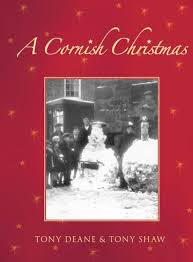
A Cornish Christmas, Tony Deane and Tony Shaw
This is the final volume of the Sutton Christmas books from the different shires of England that I've been collecting for several years now (not the last book in the series, just the one I bought last). Not sure why this is in a different format: a much smaller volume with teeny-tiny print and photos as compared to the others, but once again a series of short excerpts from Cornwall-set novels, nonfiction articles, and poetry set at the Christmas season, complete with the Cornish dialect ("z's" for "s's," for example).

Much commentary about guising, which would probably terrify the cross-dressing religious whackos showing up on the news: Christmas past was a time of men dressing up as women, women dressing up as men, and lots of costumes. It was, as you'll read, also a lot of drunken revelry. Still, happy childhood memories pop up with children happy to get an orange and an apple in the Christmas stocking, full butcher shops, and the occasional snowstorm, plus people making merry at the workhouse.

The small format of this volume makes it hard to see the historic photos. A pity.


Christmas Past
, Brian Earl
Brian Earl has been doing the "Christmas Past" podcast for six years now; it's an enjoyable excursion into the traditions of the Yuletide season. This book distills some of his most popular episodes into print; it's excellent for a gift book for someone who's curious about where our Christmas customs come from. I have several books like this (Ace Collins, Clement Miles, Tanya Gulevich, etc.), but this has updated information and also includes modern traditions—most prominently about classic television Christmas animation, but the chapter about the snow globes was fascinating, too.

As Earl points out, a lot of the traditions go back so far that it's difficult to track down exactly where they started. However, I am puzzled by his chapter on "The Twelve Days of Christmas." It is indeed a "forfeit" song, sung for party games, not a Christian metaphor, and I remember singing about "colly birds" (rather than "calling birds") from when I learned the song in the 1960s, but at one point it states "On days six through nine, we have pipers piping and drummers drumming." Actually day six is the geese and day seven is the swans, it's days eight through twelve that are interpreted as other things than birds. (Hallmark's answer to the "five golden rings" in their recent "12 Days of Christmas" ornament set was to make the fifth day a ring-necked pheasant.) I'm not sure how that error made it into the book.

Otherwise, if you've never read a book about the history of Christmas, this is a good place to start; Earl has a nice chatty writing style, and the book is supplemented with illustrations and photographs (which I wish were in color rather than retro black and white) and cheery graphics.


28 December 2021

Just Gimme That Chicken Soup...

CHRISTMAS BOOK REVIEW
The Blessings of Christmas, Amy Newmark
The 2021 edition (ta-da!) of "Chicken Soup for the Soul" contains all the things it should: more short heartwarming Christmas stories suitable for bedtime or relaxing reading during the holiday season. This edition had quite a few multicultural stories, which I enjoyed, such as a Korean woman bringing up her child to revere both her heritage and fun American Christmas customs, the story of a Jewish woman who married an Italian Catholic man and who finally won over his resolutely sorrowful grandmother, another Jewish/Christian family who have lovingly combined customs, a family who invited Navy midshipmen from other countries to their Christmas dinner and made two homesick young men from Cameroon very happy, and several more. Many of the stories involve children giving up their Christmas goodies, as the March sisters of Little Women did with their Christmas breakfast, to help other kids who had no gifts. There's the story of a homemade Christmas tree that lives up to a wealthy girl's designer one, a one-of-a-kind chair made by Mom that eventually returns home, a request for a can opener that opens an annoyed woman's heart, the gift of a coat to a boy that changes a giver's mind about charity, a flower delivery to a hospice that makes a difference—101 tender and sometimes funny stories (can't kids decorate a gingerbread house without making a mess? and why do a succession of cats keep stealing only one ornament?) to leave you with the warm and fuzzies.

The one thing that sort of doesn't amuse me is the proclamation on the back that "25 cents of every book sale goes to Toys for Tots." Surely the publishers of this book could work it that more of the profit go to the charity? Skinflints!

25 July 2021

Christmas in July

CHRISTMAS BOOK REVIEW 
The Atlas of Christmas: The Merriest, Tastiest, Quirkiest Holiday Traditions from Around the World, Alex Palmer
I've been collecting Christmas books for 20-30 years now, so a lot of the customs talked about in this book I already know...but it's still a nifty little volume, because there are so many holiday customs I didn't know about as well. The book is divided into nine parts: Ceremonies and Rituals (Three Kings Day and Santa Lucia, among others), Musical Interludes and Interlopers (bagpipes in Italy rather than Scotland and mumming in Newfoundland), Local Quirks and Curious Practices (the much-vaunted Christmas book flood in Iceland along with Finnish saunas and a "poop log" in Spain), Saints and Gift Bringers (alternate Santa like La Befana, Frau Holle, Tante Arie, and even some male ones), Devils and Troublemakers (here comes Krampus with his long tongue and bag for naughty children and the problem with "Black Peter"), Holiday Trimmings and Trinkets (beautiful lanterns in the Philippines, a Yule goat, and a wheat chandelier), Fierce Competitions and Leisurely Pastimes (Christmas verse with a difference in the Netherlands and Christmas crackers), Savory and Satisfying Holiday Dishes (holiday foods...), and Celebratory Sweets (...and desserts and drinks).
 
This book includes a lot of new traditions from Africa and the Middle East that I'd never heard of, even a Chinese custom of giving apples during the holiday season, despite the government's efforts to suppress Western holidays. If you don't have any other books about Christmas customs in other lands, this would be a great starter volume for reading about world holiday customs. It's illustrated with quaint little cutout paper type illustrations, although photos of some of the food would have been cool. The only problem is that someone appeared to quit proofreading the book about halfway through and there are references to other articles that say "see page TK," but this doesn't spoil the narrative. Also, they seemed to skip the German custom of the peppermint pig.

(Incidentally, the story you hear about the custom of the pickle ornament on German Christmas trees is not here, as Germans say it's not a German custom.)


A Christmas Legacy, Anne Perry
This is this year's Christmas book from Perry, who is most famous for her two Victorian mystery series: the later set Charlotte and Thomas Pitt stories starting with The Cater Street Hangman and the earlier set William Monk/Hester Latterley novels starting with Face of A Stranger. In each of the books she has a usually minor character from one of the two series facing some sort of problem during the Yuletide season.

A Christmas Legacy stars one of Perry's most beloved supporting characters, Gracie Phipps Tellman, once the teenage servant of the Pitts. Now married to Thomas Pitt's old partner on the Metropolitan Police, Samuel Tellman, with three children (Charlotte "Charlie," Thomas, and Victor), Gracie takes pity on Millie Foster, whose mother she and Tellman had helped when Millie was a child. Millie works as a maid for a wealthy family and things like food are disappearing from the kitchen. She's afraid something odd is going on and the servants will be blamed for it, and she's desperate for someone to help. If one of the servants gets dismissed without a character reference, they will likely spend the rest of their lives on the street. So Gracie concocts a story that Millie is ill, produces a character reference from Charlotte Pitt, and with her husband's blessing, takes Millie's place at the Harcourt home. She promises Tellman and little Charlie she will be home for Christmas, but is immediately swept up in the problems Millie has spoken about, and can't figure out for the life of her what's going on...but it has to do with the food, and something upstairs.

I think readers will guess pretty quickly what's going on after Gracie finds out the secret of the food and especially after a conversation between the Harcourts, but it's the humanity of Gracie's reaction once she discovers the problem and the actions of the servants that carry this book. The actual mystery is a bit cliche, but it's all heartwarming, and Charlie is a darling character. I really wish Perry would write some books about Tellman's cases and how Gracie has helped him, as they intimate she has in at least one case with Millie's mother, as I find Gracie and Tellman both more interesting than her newest character, Elena Standish.

24 November 2020

Thanksgiving Stories

Molly's Pilgrim, Barbara Cohen
Here's a short, simple, almost-a-picture book story that introduces us to Molly, a Russian Jewish girl whose family recently moved from New York after escaping religious persecution. In New York, at least, Molly knew other Jewish girls and other immigrants. In their new home, Winter Hill, the girls at school—the popular ones led by the conceited Elizabeth—make fun of her unfashionable clothing and her bad English, and Molly is also self-conscious of what her strict but fashionable teacher would think of her, or even worse, of her mother, who wears clothing from "the old country." Things come to a head when the children are asked to dress a clothespin as a Pilgrim for Thanksgiving. Fresh in her knowledge of the story, Molly is fearful when her mother says she will dress the clothespin—and her worst fears come true.

What is a Pilgrim? As Molly's mother so eloquently proves, it is not just a starched black-and-white separatist made from a clothespin used as a decoration, a gentle lesson that should not be soon forgotten. Get the edition with the Daniel Duffy illustrations; the newer editions have more abstract illustrations that look as if the story takes place in the 1960s. The Duffy illustrations are detailed pen-and-ink pieces that capture the 1920s setting, children's clothing, Molly's mother's dress, etc. wonderfully.


A Pioneer Thanksgiving,
Barbara Greenwood, illustrated by Heather Collins
In 1998, Greenwood and Collins published A Pioneer Sampler (known as A Pioneer Story in Canada) about a Scots-Irish family, the Robertsons, making a living in the wilderness in 1840, along with their German-heritage neighbors the Burkhalters. They build a home, start to farm, befriend and trade with their Ojibwa neighbors, have small family crises, and eventually settle in. The books are unique in that they are a Little House-like children's narrative, mostly told from the point of view of the middle children Sarah and Willie, interspersed with nonfiction pullouts about Native peoples, methods of farming and home building, plants, etc. and also projects for children (cooking, games, making simple tools) all illustrated beautifully by Collins.
 
In this, one of two sequels, the Robertsons and Burkhalters have finished their harvest and are preparing for a "harvest home" celebration, known by the new name of "Thanksgiving." As the story opens, Sarah is worried about Granny, who is not feeling well and spending much time in bed. She decides to pick some cranberries for Granny as a treat, but it means she will have to navigate the treacherous bog, with 5-year-old Lizzie in tow. There are similar adventures before the families can sit down to feast. Projects include learning how to play "conkers," making bread and cranberry sauce, and crafting a nutting basket, and the pullouts include pieces on cranberries, Native thankfulness ceremonies, the importance of nutting, etc. Charming and homey (and will make you thankful you don't have to prepare food like our ancestors did!). Even better, although Greenwood wrote this as taking place in Canada, it could actually take place in either that country or the United States, as both have a holiday called "Thanksgiving."

03 November 2020

52 Days Until Christmas

CHRISTMAS BOOK REVIEW
A Very Merry Holiday Movie Guide, Rachel McMillan
This is a fun book for anyone who likes the romance movies on the Hallmark Channel (and some on the Lifetime Channel), but unfortunately I don't. You know the ones: they've got cutesy names like Mistletoe Kisses, A Prince for Christmas, Merry and Bright, and they're basically all the same plot with the same gorgeous lead woman and the same hunky lead guy, who despite all obstacles they fall in love, sometimes with the help of a cute puppy or kitten, an adorable child or children, or a magical small town where everybody knows your name and believes in Santa Claus. I would not have read it had I known that. I thought it was a guide to all holiday movies with some activities to go with each theme (classic Christmas, romantic Christmas, etc.) Some classic films are mentioned, but very briefly. Also, it really isn't a guide to the movies at all, like describing the plot, listing the actors, and giving a rating to the film. A three-line synopsis is all each movie gets. The only movie in the book that I remember seeing and liking was the updated Little Women take The March Girls at Christmas, and even that has its flinching moments, like John Brooke and Teddy Lawrence being immature.

If you are a Hallmark Channel fan, you may enjoy the setup. There are fifteen themes, like "the shoppers Christmas," "the family Christmas," "the destination Christmas," suggested movies for each theme, and suggested activities (baking cookies during baking themed movies, exploring a city at Christmastime with the Christmas in the City films, etc.). Each chapter also has some Christmas trivia, such as when Rudolph the red-nosed reindeer joined Santa's team, or the importance of "Silent Night," or how Santa Claus was portrayed in older times, and there are some recipes.

Otherwise it's a big commercial for Hallmark Christmas films and a total bore. Very girly, too. Give me A Christmas Carol, The Homecoming, and The House Without a Christmas Tree any day.

31 December 2019

The Real Spirit of Christmas

CHRISTMAS BOOK REVIEW
Re-read: The Best Christmas Pageant Ever, Barbara Robinson
"The Herdmans were absolutely the worst kids in the history of the world. They lied and stole and smoked cigars (even the girls) and talked dirty and hit little kids and cussed their teachers and took the name of the Lord in vain..." Their mother works double shifts to make ends meet, their father left home long ago, and they move through elementary school, as the narrator states, "like those South American fish that strip your bones clean in three seconds flat..." Luckily, they don't go to church, the one place the local kids have any peace.

Well, until our narrator's little brother tells one of the Herdman kids that the minister gives them snacks at Sunday School. And they just happen to show up the day the yearly Christmas Pageant is being cast.

This is a fast, funny, but ultimately poignant story about a misfit bunch of neglected kids who cause chaos but prompts at least one person, our unnamed narrator, and hopefully the reader, to take a new look at the Nativity story. Even though this story was published in the 1970s, it has a timeless quality that still makes it relevant nearly 40 years later. A great before-Christmas read.

Re-read: The House Without a Christmas Tree, Gail Rock
In Alan Shayne's book A Double Life, he talks about how the classic 1972 Christmas special was conceived; asked by CBS to concoct a Christmas tale and wanting to present one that hadn't been done before, Shayne took a prompt given to him by a co-worker, a Nebraska native named Roberta Gail Rock. In the process he asked Gail to write down everything she remembered about her home growing up: how it looked, how her grandmother and father looked and acted, what her schooldays were like, and she did.

I have a feeling most of those notes Gail took made their way into this terrific novelization of the television production, for not only is the script told pretty much verbatim, but she adds what the best media novelizations do: delightful details that flesh out Addie Mills' everyday life in 1946, especially with much more description of the critical character of her grandmother and her eccentricities. Little pieces of business like Carla Mae's home life, Addie and Carla Mae making their names out of the letters in alphabet soup, etc., just provide homey detail to an already touching story: for years 10-year-old Addie has wished to put up a Christmas tree in her home, just like her friends, but her distant father thinks it's a waste of money. This year Addie's request will bring things to a head—but in a way that will change things forever.

This is one of my two favorite Christmas specials ever, and the novel just adds richness to already rewarding tale. Thanks, Gail Rock!

30 December 2019

A Bumper Crop of Reading

CHRISTMAS BOOK REVIEW
book icon  Carols From King's, Alexandra Coghlan
Since 1918, King's College (commissioned by Henry VI and completed during the reign of Henry VIII) in Cambridge, England, has offered a program on Christmas Eve at 3 PM called "Festival of Nine Lessons and Carols." I have a CD of the service, but for the first time this year had an opportunity to listen to it broadcast live thanks to the internet. I had also picked up this little book from the BBC about the history of the service.

What this "little book" is is delightful, telling not only the story of the "Nine Lessons and Carols" but the history of carols in general—they weren't originally just for Christmas, they were considered earthy folk contributions and generally didn't fit the "hymn" category of sacred, they came from disparate sources, the Puritans (of course) hated 'em. Another novelty about the service is that for many years now they have been commissioning a new carol for each year's service, and some of the disapproving comments King's has received about them are very funny. She talks about the backgrounds and the creation of several of the new carols, but, sadly, she missed one of my very favorites, "Candlelight Carol."

Truth be told, I was kind of disappointed when I saw what a small book it was, until I got into it: it's a little volume packed with a lot. If you've heard of or heard the Festival of Nine Lessons and Carols and would like to learn more about it, this is the right book for you.

book icon  Ideals Christmas, from the Ideals Publication
I've been buying these seasonal books—I really, really, really miss their Thanksgiving/autumn edition—probably since the 1990s, when the photography and artwork improved, and every year it's a treat. This, their 75th anniversary issue, was delightful, with some poetry I had forgotten (e.e. cummings "little tree") and original verse written by readers, the usual Christmas essay from Pamela Kennedy, apt quotations, a couple of recipes (which is Quite Enough, thank you!), and the usual illustrated version of the two different Bible narratives (Luke and Matthew) about the Nativity.

Some of my favorite verse from this edition: "Silhouette," "Wonderful Wintertime," "Red Birds," "Christmas Brunch," "Chickadees," "Children's Winter," and "Sparkle Sparkle."

I also particularly enjoyed the essays/stories "Christmas Thoughts for All the Year," originally from "McCall's," Clara Brummert's "The New Skates," and Pamela Kennedy's sweet "A Long Way from the Manger."

The final third of the issue is a representation of covers over the years since 1944, the story of how Ideals came to be, and some representative pages from each decade. Truly a "box of delights" in the pages.

book icon  Re-read: A Little House Christmas Treasury, Laura Ingalls Wilder with colorized illustrations by Garth Williams
This is a compilation volume of most of the Christmas stories from the "Little House" books: from Christmas in the Big Woods to Mr. Edwards' encounter with Santa Claus on the prairie to two different Plum Creek Christmases (Christmas horses and Laura's first Christmas tree) to Almanzo Wilder's food-filled Christmas to a Christmas celebration in May after the Long Winter to a final Christmas with Laura just before her marriage. It's sweet to go back and read these, about children who have such full lives that they are content with items like red mittens, a stick of candy, or a tin cup for Christmas.

These aren't all the "Little House" Christmas tales, however; this "Treasury" volume omits the story of Pa getting stuck in a snowstorm on Christmas Eve and also the Christmas when little Grace received the swansdown cape. To get all of them you must purchase both volumes (one red and one green) of A Little House Christmas.

25 December 2019

Everyone is Family at Christmas

CHRISTMAS BOOK REVIEW
The Tuckers: The Cottage Holiday, Jo Mendel
Dear America: Christmas After All, Kathryn Lasky
These are two of my yearly Christmas reads, and I've reviewed them so many times I'm loathe to repeat the reviews. You can search for the titles and review all the different things I've noted about them. They are both series books: one in a series about a family and one in a series of epistolary historical novels.

The Tuckers are a common series family: five kids, mom, dad, grandparents, the inevitable shaggy dog, and a cat. The kids occasionally quarrel, but are always ultimately kind to each other and other people. The vocabulary is simple, so this is safest for even younger children, although there is an incident involving an abandoned baby and a lost woman stalked by a cougar. The others in the series are alternately sweet or funny, but this one has a special touch to it as if the author was adding some depth to the character of Penny, who is pretty much just a sweet seven-year-old in the other volumes. Compared to her active brothers and sister, Penny is physically frail, and she hopes a Christmas trip to the family's lake home will help her find her own strengths. It's a wonderful snow romp with almost every Christmas dream you might have ever had as a kid: endless days playing in the snow, skating, cutting your own Christmas tree, lots of yummy food, and adventures with happy endings. The ending always brings a lump to my throat.

Christmas After All is a Christmas tale of a different sort: a family in 1932 Indianapolis having to tightening their belts as the effects of the Depression grow deeper. Youngest daughter and next-to-youngest child Minnie Swift narrates as the family closes off more rooms in their home to save coal, eats pretty-much-meatless meals as it's all they can afford, and notice that day by day their father comes home a little earlier until one day he doesn't go to work at all, as his company has gone out of business. Then a twist of fate sends them an orphaned cousin, Willie Faye Darling, who comes from a dust-bowl ravaged town in Texas. As Minnie and her science-geek little brother Ozzie and the rest of the family are awed by the different life Willie Faye has led, the Dust Bowl survivor also is fascinated with the chatty, diverse Swifts, who, like the Tuckers, rally around each other in times of need.

Yet it's quiet, artistic, humble Willie Faye that will prompt their inventiveness in a seemingly dark Christmas, and who will get the Swifts through their greatest family crisis. It's a dark story sometimes (something very upsetting happens to one of Minnie's friends, and then something shocking happens to the Swifts themselves), but also one full of hope. The one false note is the standard "Dear America" epilogue that strays into the realm of fantasy, and checks off every significant late 20th century historical event to involve the various members of the family with.

Otherwise, like Mary Poppins, practically perfect in every way.

24 December 2019

Finding Home on Christmas Eve

CHRISTMAS BOOK REVIEW
The Story of Holly and Ivy, Rumer Godden
This is a darling little story that almost takes as long to describe as it does to read. Ivy is an orphan who has not been "claimed" by some nice person to spend Christmas, so she is sent by train to the orphanage's Infants Home. Rebelliously, she gets off the train in Aylesbury (for some strange reason changed to "Appleton" in newer versions), looking for a home with a Christmas tree but no children. In a nearby Aylesbury toyshop a doll dressed for Christmas named Holly wishes for a little girl. And close by, childless Mrs. Jones, wife of the town policeman, wishes for a little girl. For this is a story about wishing, simply told but full of detail and feeling.

A little gem.

Sleigh Bells for Windy Foot, Frances Frost
"On Friday, the last day of school before Christmas vacation, Toby gazed dreamily out the windows of the seventh-grade classroom.... The village lawns about the white houses lay withered and rusty yellow; the leaves had long ago been raked to the roadsides and burned; and the only brightness was the dripping scarlet of the barberry bushes around the north side of the square."  

I first read this book around 1964 and it was one of the first ones I looked for when I had my own money. Visiting with the Clark family in Vermont in 1948 is like visiting relatives, and I've been envious of their farm Christmas for years (although I really wouldn't want to be Mom cooking that Christmas dinner!). It awes me with the energy everyone has: Toby repairs a sleigh all day, does farm chores, and still has effort left for skiing. And the food! On Christmas day Toby gets up, does chores, opens gifts, eats breakfast, helps his Mom with dinner, eats cookies, has an enormous dinner and dessert, takes Tish into town and they both have hot fudge sundaes (!!!!), and later on eats more at a party. But he's so active he never gains a pound!

This book leaves you wrapped in warmth. As busy and as choked by chores as a farm family is, this family always has time for each other and their friends. They attend homey town functions, sing carols together, make sure no one feels left out, and do Christmas the way it should be done: not all about expensive gifts, but about togetherness and love. Along with that, there's an adventure with a bear and another with skiing, but the best parts are like the passage quoted above: time spent in homey actions and simple holiday preparations, and finishing up warm and happy with friends and family gathered around.

24 December 2018

More Christmas Reading!

CHRISTMAS BOOK REVIEW
Santa Claus: A Biography, Gerry Bowler
Bowler, whose World Encyclopedia of Christmas is a classic, has tackled a smaller field in this history of "jolly old St. Nicholas." The original Nicholas was a Christian Bishop who was born in Turkey; he ended up being the patron saint of children, sailors, pawnbrokers, students, repentant thieves...and more. How he ended up delivering presents in a sleigh drawn by eight reindeer (two named after "thunder" and "lightning") and wearing a red suit is a convoluted tale that includes Holland, Spain, wooden shoes, and a New York society devoted to the good saint.

Once the history lesson is over, Bowler gets into juicier territory with chapters about Santa Claus as an advocate for good causes, in advertisements, in wartime (with creepy little details about how Adolf Hitler made the holiday all about him), and in the media, with a final, wistful chapter about the future of his persona.

Bowler is, as always, a delight to read, and his final four-paragraph conclusion may leave you with tears in your eyes. If you're looking for a history of Santa Claus, this one is excellent.

Christmas Ideals 2018, from Worthy Publishing Group
Ideals annual Christmas is the usual cheery combination of simple poetry, cozy essays, and charming photographs mixed with nostalgic artwork. Of the poems, "The Colors of Christmas" is my favorite ("Little Lights" is also sweet). There's a breathtaking photograph of a red covered bridge in the snow, and two other familiar places popped up: a beautiful white church in Queechee, Vermont, and a shot of the Public Garden in Boston in the snow. Homesick now. I'm also partial to the lovely painting of the stable animals overlooking the baby Jesus, and the essays "Planting Hope" and "Christmas Photographs."

Lovely as always.

And the last two (unless I find a copy of Christmas in Puerto Rico) of the World Book Christmas books,
Christmas in Greece 
Christmas in Finland
These are lovely books of interest to both children and adults, with color photographs and text talking about how the people in that particular country (or, in the case of some of the books, region) celebrate the December and January holidays. The Greeks celebrate the Advent period (while so many of the rest of us are running around shopping) by fasting and do not start preparing for Christmas until Christmas Eve. Even then, the day is reserved for religious pursuits, and it's only then gift-giving preparation begins, because the Greeks reserve New Year's Day (St. Basil's Day) for that purpose. During the 12 days of Christmas everyone must beware of the kalikantzari, evil imps who will bring bad luck if you don't stay on your guard! The Greeks even have a version of "First Footing" on New Year's Day, like the Scots.

To the folks in Finland, Lapland is where Santa Claus lives, and you can indeed go visit him in Santa Claus Land and interact with his reindeer, but the Finns have other unique customs: a Christmas sauna, the making of complex ornaments out of straw (straw used to be scattered on the floors of home, to remind people of the child in the manger, but it's now considered a fire hazard), their version of Santa Claus having evolved from a goatlike character who now looks like everyone else's Santa (but still has a goat's name), and the Finns' fondness for St. Ann, the mother of the Virgin Mary.

There are insets about the Sami, the original inhabitants of Lapland, who believed in magic; the annual proclamation of peace that means Christmas can begin; the visit from joulekuppi (Santa) in person to the children. And in both books, as in all of the World Book Christmas volumes, there are crafts, songs, and recipes at the back.

20 December 2018

Christmas Reading...So Far!

CHRISTMAS BOOK REVIEW
book icon  Re-read: Christmas in America, Penne Restad
book icon  Re-read: The Battle for Christmas, Stephen Nissenbaum
While watching the History Channel's Real History of Christmas, the presence of both Restad and Nissenbaum made me dig up these fairly similar histories of Christmas in the United States.

People wonder what some early Americans had against a nice family-oriented holiday like Christmas. Was it the gift-preparation frenzy that frustrates us today? Rather, it was because the early celebrations of Christmas—which combined the religious story of the birth of Jesus Christ with older midwinter festivals—had increasingly become a noisy, drunken celebration (think St. Patrick's Day combined with New Year's Eve and Cinco de Mayo) in which inebriated gangs of boys and men had a "right" to invade your home and demand liquor and food. Gunfire was often involved, as were fireworks. Children were still considered "small adults" and not worth petting and praising, let alone giving toys to. Toys supported idleness.

As both writers explain, all those traditions we consider "old fashioned" are less than 200 years old. Christmas started out being banned by strict Christians in New England, but it wasn't long before these strictures became loosened. The holiday was only "illegal" for less than twenty years, and even though well into the 1870s businesses might still be open on December 25, more and more people were taking up this "new" Christmas, that involved family, children's toys, reasonable feasting, and charity to the poor. It also involved a new figure: Santa Claus, who was, Birnbaum tells us, not only a gift giver, but an egalitarian man, one who smoked a short pipe! (Long pipes were for the wealthy!)

Incidentally, if you've complained about the commercialism of Christmas, you'll agree with this woman, who laments "Christmas is coming in a fortnight, and I have got to think up presents for every body!" It's so tedious! Everybody has got everything that can be thought of."

This was written in 1850!

Both books are interesting glimpses into U.S. Christmas history, but Birnbaum goes into more detail about the aspects: when the Christmas tree did arrive on these shores (it wasn't after Queen Victoria received a Christmas tree from Prince Albert) and the development of gifts solely as Christmas presents (like annual Gift Books). Both address the issue of Christmas in the slave states, where in general license was given to the workers during Christmas and New Year as a safety valve to keep them under control the rest of the year. (Drinking to excess was encouraged and even forced, so later the "massa" could say the slaves were irresponsible and not worthy of freedom. Again, Birnbaum goes into more detail.)

I recommend both.

book icon  Chicken Soup for the Soul: The Wonder of Christmas, edited by Amy Newmark
This year's edition of 101 heartwarming and/or heart-tugging stories about the holidays (including Thanksgiving mishaps, Hanukkah tales, and even a New Year surprise or two). If you enjoy books of inspirational stories or like the other books in this series, this one should also be a winner.

book icon  The Christmas Book, Francis X. Weiser
I've wanted this book for years. This is one of those volumes about Christmas that is quoted in numerous other volumes about Christmas, and it was only reprinted in 2017 by St. Augustine Academy Press.

Originally written in 1951, Weiser, a Jesuit priest, tells the story of Christmas from both a Christian and secular point of view, starting with the Biblical history of Jesus Christ and some of the misconceptions around His story (they were Magi, "wise men," probably astrologer/astronomers, not Kings, and nowhere in Biblical text does it mention there were three; there were three gifts). There are two interesting chapters on the history of ancient carols (a carol, originally, was sung to a dance in which the participants went in a circle) and also of carols in other countries before moving on to more modern songs like "O Little Town of Bethlehem" and "Silent Night."

Later chapters talk about gift giving, Christmas trees, and feasting before going on to Christmas customs in other countries.

This is a nifty little book of old fashioned customs which you might want to use to bring back to your own home if you feel Christmas has become too "electronic."

book icon  The Ghost of Christmas Past, Rhys Bowen
In this latest of the Molly Murphy mysteries, Christmas is approaching, but Molly is not anticipating it as she might have. She has already received bad news on one front, and now she finds out her mother-in-law will be spending Christmas elsewhere with a friend, so she, husband Daniel, and toddler Liam won't be spending the holiday in the country. Worse, her friends Sid and Gus tell her that Bridie, the little girl Molly and Mrs. Sullivan have nurtured for years, will be leaving school because her workman father is finally returning. Molly's depression deepens until the friend of her mother-in-law generously invites them to their country house party as well. Once there, the Sullivans find an unsettled house and an old mystery. And there's nothing that piques Molly's interest like a mystery.

This is a nicely atmospheric Christmas mystery even if the villain is telegraphed almost from the beginning, with a Dickensian twist in a couple of places. All the old favorite characters return, but sadly two of them had to change to support the ending.

book icon  Top Elf, Caleb Zane Huett
This is a fast, funny, and very imaginative children's book that has a bit of resemblance to Christine Kringle in that Santa Claus is not an immortal, but instead "Santa Claus" is a job that's handed down from father to son (or perhaps to child). The current Santa Claus wishes to retire, and traditionally his eldest son, Klaus Klaus, an egotistical swaggerer, would take over the job. Instead Santa institutes a contest called The Santa Trials. Whomever wins the contest becomes Santa, even if it's not one of Santa's children (Klaus, Sally, Kurt and Bertrand). Our protagonist, good-natured Ollie Gnome (whose dad makes ice cream and whose mom is one of Santa's costume designers) decides to enter the contest with his best friend Celia Pixie, a prodigious inventor. Elf bully Buzz Brownie also enters the contest, a supposed kid named "Ramp" who looks like he's much older, and even a Claus cousin, the duplicitous Andrea. Day by day the entrants are led through increasingly tough trials, the situations get wilder, and cheating is rampant.

This is just a plain fun book, full of inventive inventions, puns, action, and novel characters and situations, like the reindeer Stable and "Crasher," Ollie's new reindeer buddy. Without making a big deal of the lesson, the author has Ollie persist without ever losing his ability to negotiate. Also, there are some very serious issues brought up in the text that add to the drama, such as a parent's expectations for their child and how it can harm them.

Amazon says this book is for Grades 3-5, and I guess in these sophisticated days kids don't believe in Santa much past age 6 or so, but if you have a child that still does believe in Santa in that age group, or a Grade 2 child who's an advanced reader, you might want to know that Santa reveals something that might upset a child.

book icon  Menotti's Amahl and the Night Visitors, adapted by Frances Frost
I found this 1952 book at a book sale and picked it up with fond memories of watching Amahl in my childhood. It's the story and the songs told in prose for children, with pen and ink illustrations, some of them colored. It was nice to relive the story, and then I found the original online (search YouTube), introduced by Menotti himself. If you can pick this up for a reasonable price it may bring back fond memories, and could also be used in homeschooling.

book icon  Re-read: Sleigh Bells for Windy Foot, Frances Frost
The Clarks are a small farm family in late 1940s Vermont in this classic four-book children's series by Frost, a Vermont native. In the opening book, 12-year-old protagonist Toby Clark received the dapple-grey pony Windy Foot as a birthday gift and raced him in the annual county fair pony competition, where he met 12-year-old Tish Burnham, a horse breeder's daughter. At Christmas, the whole family: dad, mom, Toby, 9-year-old Betsy, 5-year-old Johnny, and farmhand Cliff (who's pretty much family) are preparing to welcome Tish and her father Jerry for a visit as well as planning a true farm Christmas with homemade decorations, gifts ordered from the mail order catalog, caroling under the town Christmas tree and shopping at the general store, and Toby taking Tish out riding in the new sleigh he refit for Windy Foot.

Fifty years after I read it for the first time, I still get as much enjoyment out of this story as I did the first time, even if Johnny's little impromptu poems still make me roll my eyes and the girls' brief talk about dolls bore me. It's an annual read, and a portrait of a vanished era: cows milked by hand and barns lit by lanterns, kids going on their own showshoeing to gather Christmas greens or going skiing without adults keeping tabs on their every move, boys renovating things on their own, the family gathered by the fire instead of each around an electronic device. There's even a marauding bear, a skiing accident, and a stolen sleigh to add a little excitement. It's very easy to be taken into the warm home-circle and feel comfortable with these characters.

I have always found it notable that in a book written in 1948, Tish's ambition is to be a surgeon or at the least a medical doctor. Toby finds that this idea of "a girl being a doctor" fills him with "awe," but also thinks that she'd make a good one. There is no attempt by Toby or any other adult to try to dissuade Tish from this goal, a surprising attitude in an era when even "career girls" were eventually expected to quit their jobs in favor of marriage and a family. Also, Betsy is given an unusual Christmas gift and no one says that a girl should not be receiving such a gift.

Frost also has a talent with picturesque descriptions that remind me of Gladys Taber. Passages like this are common:  "The village lawns about the white houses lay withered and rusty yellow; the leaves had long ago been raked to the roadsides and burned; and the only brightness was the dripping scarlet of the barberry bushes around the north side of the square." Or there's this: "Up on the south hill the snow lay heavily on the dark green boughs of spruce and hemlock, pine and fire. Silently Toby and Betsy snowshoed through blue shadows and brilliant patches of sunlight...[t]here at the farther edge of the clearing, on the verge of the dark woods, stood a young fox, curiously unafraid, his fur golden russet against the snow, watching them with burning eyes." This is a nostalgic book well worth seeking out for its approachable characters, family interactions, Christmas-cozy factor, and pacing.

book icon  Re-read: The Victorian Christmas Book, Antony and Peter Miall
This book was referenced so many times in The Country Diary Christmas Book that I finally hunted up a copy. The Miall brothers use catalogs, images, and books of the time to paint us a Victorian Christmas, from the historical events leading up to the Victorian revival of the holiday as a children's festival, then to each sequence in the celebration, from the changeover from goose for dinner to turkey to the presentation of the pantomime (a uniquely British theatre experience that does not involve mime), to finally end on Epiphany. Included are pages of old magazines, gift projects, household books, original recipes, period illustrations and liberal quotes from that most Victorian of books, A Christmas Carol. The only problem is that the book is only 7" x 9 1/4" and many of the reproduced ads are not legible, and one wishes some of the etchings were larger so the details could be made out. Wonderful historical treat; however, not as good as The Country Diary Christmas Book.😀