30 November 2022

"On the First Day of Christmas, Moss Gave to Me..."

CHRISTMAS BOOK REVIEW
The Twelve Birds of Christmas, Stephen Moss
There are many stories about what the "12 Days of Christmas" song means, even going as far to say it's a Christian allegory. In truth it's a forfeit song, sung during Christmas games in the 18th century as a penalty for losing a game. You also may ask "Aren't there only six birds mentioned in the song?" Yes, technically...but Moss here makes a delightful case for the song referring to a dozen birds, from the classic partridge, turtledoves, chickens (French hens), blackbirds ("calling" birds is a corruption of the original word, "colly," meaning black), geese, and swans, to the yellowhammer ("yolring" corrupted to "gold ring"), nightjars (who supposedly "milked" goats' udders), cranes (who do a courting dance), grouse (who leap as part of their courting ritual), sandpipers, and woodpeckers (both for obvious reasons).

You pretty much need to be a bird lover to really enjoy this book, but if you are, it's a delight, but also a little bit sad, since you learn about so many birds, like the black grouse and the partridges, and especially the turtledoves, who are endangered species now because of changed farming methods. You'll learn that all swans in England don't belong to the queen, how Canada geese are an invasive species, the amazing spectacle of black grouse displaying themselves in order to find a mate, the origins of the domestic chicken, and more. The chapter about the nightjars are fascinating because they are such odd-looking birds and the belief that they sucked milk from goats--in reality they were eating the insects that surrounded barn animals--was really odd!

27 November 2022

A Christmas Gathering Turns Deadly

CHRISTMAS BOOK REVIEW
The Dead of Winter, Nicola Upson
Detective Archie Penrose has an interesting Christmas proposition for Josephine Tey (Tey's real name was Elizabeth MacIntosh, but in this series Upson refers to her as a real person named Josephine Tey) and her partner Marta Fox: join him on the picturesque island of St. Michael's Mount for a lavish Christmas gathering which will benefit refugee Jewish children already fleeing from Hitler's tyranny; the castle on the island belongs to the family of his old friend Hilaria. He tells them he will be escorting a "famous actress" who will also be in attendance. To his surprise, one of the locals on the island is Reverend Richard Hartley, who he met 18 years earlier at the scene of a horrific murder. But the Christmas gathering is already getting tense: one of the guests is a Nazi sympathizer, Archie's "actress" is herself being stalked by Nazis, at least one of the guests isn't who they seem, and all sorts of secrets are being held on the island.

This is Upson's riff on a Agatha Christie mystery trope (people trapped in a remote location) crossed with a little social commentary. You are actually an eyewitness for more than one crime and know who some of the guilty are. The main charm of this book is that it's a mystery set at Christmas on a unique island off the coast of Cornwall, England, that can only be reached at low tide, and which was coveted by the Nazis. The family Upson portrays as owning the castle actually did, and the descriptions of the castle, the village, and the island people is very evocative and fascinating.

Some of the other plot choices seem odd. It was interesting to learn about "the Hollywood star"—a real-life person—that Archie brings to the island, but she seems to be in the story for no reason but to feature this particular person. Also, this time Josephine and Marta take a back seat in the investigation; it's nice to see Archie in action, though, so I didn't quibble too much. I ended up enjoying the story very much.

Note: In the United States this book is known as The Secrets of Winter, which isn't half as ominous as the British title.

25 November 2022

Over the Border from Wales

CHRISTMAS BOOK REVIEW
A Monmouthshire Christmas
, Maria & Andrew Hubert
Alan Sutton Publishing has a series of these "Christmas anthologies," the first which I bought at a book sale several years ago, and I try to pick up inexpensive copies when I can find them. Most of them concentrate on a certain shire or area in England, but there are a handful, like A Dickens Christmas and A Bronte Christmas that are set around an historic or literary era instead.

I knew nothing about Monmouthshire, so I was surprised and happy to discover it is just over the border from Wales (and now known as Gwent), so we have several entries about the Welsh Calennig custom (similar to caroling or "souling" in which groups go around offering songs and a decorated apple known as a "Monty"). While many of these books have excerpts from fiction, this book is comprised almost completely of memoirs from people from the early 1900s all the way until the 1960s of the uniquely Welsh customs like Plygain or Mari Lywd; or growing up poor or in orphanages, but still enjoying the small tokens they received at Christmas--one multi-page selection chronicles centuries of entertainment at Tredegar House, the manor house of the Morgans; while the narrative talks about pre-1900 parties, there are photos of 20th century entertainments, too. Caroling, a ghost story at a priory, and some commentary on Tintern Abbey also make for great reading, plus there are photos and engravings galore.

A very interesting volume of holiday memories to start off the season!

24 November 2022


20 November 2022

"Stir Up, We Beseech Thee, O Lord..."

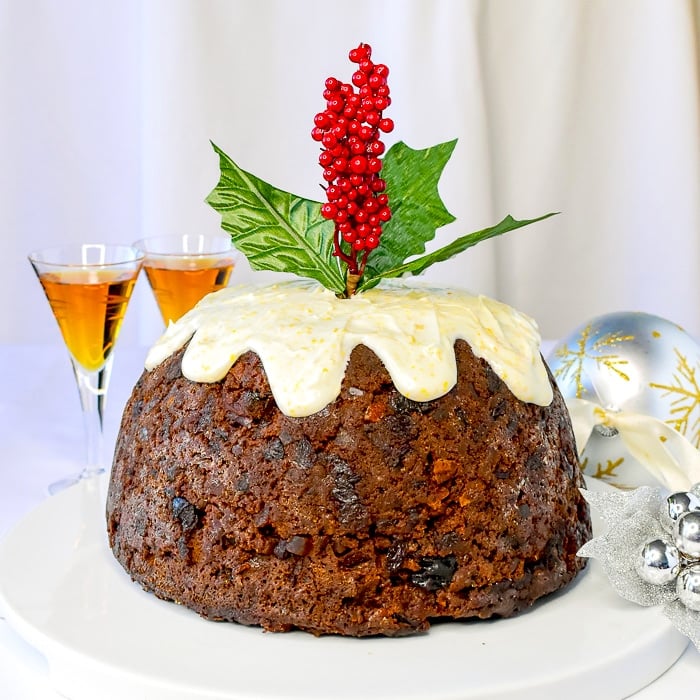
Plum Pudding


Here once again is the "Last Sunday in Ordinary Time" in the Christian calendar. Next Sunday is the First Sunday of Advent, in which Christians begin to prepare for Christmas. In stores this means a frenzy of shopping and the putting up of Christmas decorations.

In the past this preparation was more subtle; it was behind the scenes. Christmas decorations didn't go up until Christmas Eve, and then they remained up until January 6, the Feast of the Epiphany. In the very oldest of traditions, you needed not take down your decorations until Candlemas, February 2.

The earliest preparation was that of the Christmas Pudding, or "plum pudding," which was made and then let rest (allowing all the alcohol in the mix to "settle in"). This was made on "Stir-Up Sunday," from the text for that Sunday from The Book of Common Prayer: "Stir-up, we beseech thee, oh Lord, the wills of thy faithful people; that they, plenteously bringing forth the fruit of good works, may be thee be plenteously rewarded; through Jesus Christ our Lord, Amen."

"The whole family participated in Stir-Up Sunday, with each member taking a turn to stir the pudding mixture—always from east to west to honor the journey of the Magi—making a wish as they did...Also symbolic is the notion that the Christmas Pudding should have thirteen ingredients to represent Jesus and the twelve Apostles. Traditionally, the ingredients were raisins, currants, suet, brown sugar, breadcrumbs, citron, lemon peel, orange peel, flour, mixed spices, eggs, milk, and brandy. (No plums.)"*


* from the Christmas 2021 issue of "Early American Life."

21 October 2022

Harvestime


"Autumn arrives, array'd in splendid mein;
Vines, cluster'd full, add to the beauteous scene,
And fruit-trees cloth'd profusely laden, nod,
Compliant bowing to the fertile sod."

. . . . . Farmer's Almanac, 1818

The harvest moon was once used for...harvesting! People living without electric light over one hundred years ago had much sharper vision in the dark because they were more used to low light. When harvest time came, they would work under full moonlight to help get the harvest in more quickly.

25 September 2022

Rudolph Day, September 2022

"Rudolph Day" is a way of keeping the Christmas spirit alive all year long. You can read a Christmas book, work on a Christmas craft project, listen to Christmas music or watch a Christmas movie. This month I've had an ARC to read!

CHRISTMAS BOOK REVIEW
Christmas Past, Brian Earl
Brian Earl has been doing the "Christmas Past" podcast for five years now; it's an enjoyable excursion into the traditions of the Yuletide season. Coming soon is this new book that distills some of his most popular episodes into print.

The book, which I assume is in color, rather than the black and white version presented in the Advance Reader Copy PDF, is excellent for a gift book for someone who's curious about where our Christmas customs come from. I have several books like this (Ace Collins, Clement Miles, Tanya Gulevich, etc.), but this has updated information and also includes modern traditions—most prominently about classic television Christmas animation, but the chapter about the snow globes was fascinating, too.

As Earl points out, a lot of the traditions go back so far that it's difficult to track down exactly where they started. However, I am puzzled by his chapter on "The Twelve Days of Christmas." It is indeed a "forfeit" song, sung for party games, not a Christian metaphor, and I remember singing about "colly birds" (rather than "calling birds") from when I learned the song in the 1960s, but at one point it states "On days six through nine, we have pipers piping and drummers drumming." Actually day six is the geese and day seven is the swans, it's days eight through twelve that are interpreted as other things than birds. (Hallmark's answer to the "five golden rings" in their recent "12 Days of Christmas" ornament set was to make the fifth day a ring-necked pheasant.) I'm not sure how that error made it into the book.

Otherwise, if you've never read a book about the history of Christmas, this is a good place to start; Earl has a nice chatty writing style, and the book is supplemented with illustrations and photographs and cheery graphics.


22 September 2022

The Equinox Has Arrived!

5,984,354 Autumn Photos - Free & Royalty-Free Stock Photos ...
Happy first day of fall!

Or is it?

Meteorological autumn, in fact, began on September 1; September 22 simply marks the autumnal equinox, the second time in the calendar year when the days and nights are of equal length (well, also depending upon which latitude you are situated at!).

Here's more information about what happens on the autumnal equinox, from Space.com.

This day is also the celebration called "Mabon." "Mabon is a pagan holiday, and one of the eight Wiccan sabbats celebrated during the year...[i]t also celebrates the mid-harvest festival (also known as the second harvest)...[t]o celebrate this holiday, pagans might pick apples. Apples are a common symbol of the second harvest." Read more about Mabon from this article from the Boston Public Library and also at The Goddess and the Greenman.

Here at Autumn Hollow we think of autumn as our "social season": first the Yellow Daisy Festival at Stone Mountain Park, then Taste of Smyrna three miles "up the road." The North Georgia State Fair usually opens around this date, but we don't usually attend because it's still too warm. Following will be the Georgia Apple Festival north of us in Ellijay, the Friends of the Library Book Sale, and then perhaps the little magical convention "Conjuration" at the beginning of November.

This is followed by Veteran's Day, of particular interest to my husband and myself because both our fathers were in the service, and then what's my favorite holiday after Christmas, Thanksgiving.

It's also a time of changing leaves and cooler weather, "the sweater weather" I love best, and autumn foods like fresh-picked apples, cinnamon-flavor things, and warm soups. All hail autumn!

14 February 2022

Happy Valentine's Day!


06 January 2022

Stars, Lovefeasts, and The Celebration of the Season

CHRISTMAS BOOK REVIEW
Moravian Christmas in the South, Nancy Smith Thomas
This is a beautiful coffee-table sized book about people of the Moravian faith who settled in Salem (now Winston-Salem), North Carolina, and their Christmas customs. The Moravian sect was founded in Prague by Jan Hus, and they originally emigrated from Europe to Pennsylvania, where they founded three towns, including Bethlehem, now the center of the Moravian community in the United States. The Moravians have a very distinct way of observing the Christmas season, centered of course on the birth of Christ, and including a celebration called a "lovefeast" and a decoration of a multipointed "Moravian star." However, unlike some other Protestant sects, which rejected Christmas because of the drunken revelry that came with it, Moravian society has embraced much of the secular side of Christmas that does not "go overboard," including Santa Claus, Christmas trees, caroling, etc.

So one of the treats of this book is that not only does it chronicle how Moravians have celebrated Christmas over the years, with excerpts from pioneer journals and Native American narratives, but it's also a pocket history of Christmas as it developed in the United States (Santa Claus spreading from the Dutch tales of St. Nicholas and reaching Pennsylvania as "Bellsnickle" or "Pelznichol," the Christmas tree coming from German immigrants and then given popularity by Prince Albert, etc.). The volume is illustrated liberally with drawings, artwork, exhibitions in New Salem, North Carolina, photographs, paintings, handbills, and documentation of historic Christmas celebrations.

As a publication of the Old Salem museum in North Carolina, this is a marvelously informative and very "kringly" overview of a specific society's Christmas customs.

01 January 2022

Christmas Among the Spires

CHRISTMAS BOOK REVIEW
An Oxfordshire Christmas, compiled by David Green
Britain's Alan Sutton Publishing did a collection of these volumes for what looks like almost every shire in England, not to mention for historical eras (A Victorian Christmas, An Elizabethan Christmas, A Regency Christmas, etc.). I picked up A Worcestershire Christmas and A Surrey Christmas several years back at the library book sale, and have been buying them one by one ever since.

Oxfordshire Christmas takes place along the streets and around the city of Oxford. Many of the excerpts both factual and fictional talk about the simplicity of Christmases in the past: simple children's gifts consisting of an apple, an orange, sweets, nuts, and perhaps a penny or a sixpence. Little girls received dolls, lucky little boys got a little horse or car or perhaps a locomotive engine. Decorations were greens trimmed from the countryside and paper chains. Attending church services were de rigueur.

Another story tells the tale of the estate of the Lovells, the family involved in the ballad that became the famous poem "The Mistletoe Bough." Mummers and the St. George and the dragon play make further appearances, we read a Christmas piece from the famous "Miss Read," and two different excerpts from the "Lark Rise" series (as in the series From Lark Rise to Candleford). "Christmas in Banbury" features the account of a freezing winter, W. H. Auden sings the after-Christmas blues, an article examines Christmas hymns specific to the Oxford countryside, Pam Ayres sees—in wry verse—the frustration of the season, and a long tale proves that, through the years, all anyone can ever talk of on Christmas Day is the weather.

As always there's a ghost story, Christmas at a vast estate, the Boxing Day hunt, and more. A satisfactory edition of this series.

Happy New Year!


28 December 2021

Just Gimme That Chicken Soup...

CHRISTMAS BOOK REVIEW
The Blessings of Christmas, Amy Newmark
The 2021 edition (ta-da!) of "Chicken Soup for the Soul" contains all the things it should: more short heartwarming Christmas stories suitable for bedtime or relaxing reading during the holiday season. This edition had quite a few multicultural stories, which I enjoyed, such as a Korean woman bringing up her child to revere both her heritage and fun American Christmas customs, the story of a Jewish woman who married an Italian Catholic man and who finally won over his resolutely sorrowful grandmother, another Jewish/Christian family who have lovingly combined customs, a family who invited Navy midshipmen from other countries to their Christmas dinner and made two homesick young men from Cameroon very happy, and several more. Many of the stories involve children giving up their Christmas goodies, as the March sisters of Little Women did with their Christmas breakfast, to help other kids who had no gifts. There's the story of a homemade Christmas tree that lives up to a wealthy girl's designer one, a one-of-a-kind chair made by Mom that eventually returns home, a request for a can opener that opens an annoyed woman's heart, the gift of a coat to a boy that changes a giver's mind about charity, a flower delivery to a hospice that makes a difference—101 tender and sometimes funny stories (can't kids decorate a gingerbread house without making a mess? and why do a succession of cats keep stealing only one ornament?) to leave you with the warm and fuzzies.

The one thing that sort of doesn't amuse me is the proclamation on the back that "25 cents of every book sale goes to Toys for Tots." Surely the publishers of this book could work it that more of the profit go to the charity? Skinflints!

27 December 2021

D.H. Lawrence, Dame Edith Sitwell, and More Share Christmas Memories

CHRISTMAS BOOK REVIEW
A Derbyshire Christmas, compiled by Robert Innes-Smith
I found my first Sutton "Christmas anthologies" (A Worcestershire Christmas, if you care) at a library book sale many years back. When A Surrey Christmas turned up at a subsequent sale I realized this was a series. These contain short excerpts of Christmas/Christmastide passages from various British novels, memoirs, and poetry books, with the action taking place in the shire denoted in the title.

Derbyshire is just south of Sheffield, England (famous for their knives), and this volume is crammed full of mostly reminisces and diary entries from the 1840s through the 1940s, the most famous of the correspondents being Dame Edith Sitwell, the poet, and her younger brother Osbert. There is only one verse in this volume, which is very rare, unfortunately it has to do with fox hunting, but then it's a touching tale of how Lord Harrington's hounds, turned out for their first hunt after he died, went straight to his grave as if called. There are a couple of other hunting memories, and the rest are more salubrious, from how Christmas was celebrated in a great country house, including the festivities "downstairs" among the servants; a couple of accounts of Christmas in the workhouse which are much more cheerful than George R. Sims' pathetic verse tale; diary entries from Edith Sitwell and an account of Christmas by Osbert; only one ghost story, but it's an amusing one; a medieval tale at Haddon Hall; different recountings of old customs like caroling, "Thomasing," guising, mumming, and the St. George and the Dragon play; and even Christmas letters from D.H. Lawrence, who called Derbyshire home.

One of the more interesting volumes in that it includes many personal accounts from the POV of different ages and different eras.

25 December 2021


24 December 2021

The People of Christmas: Clement C. Moore

If you have ever explored New York City extensively, you have possibly visited a neighborhood at the lower portion of Manhattan Island, near Greenwich Village: Chelsea. Chelsea has had a varied history and today has an extensive LGBTQ population and is a popular shopping venue, but it started out life as a sprawling estate that eventually belonged to a professor of Oriental and Greek Literature as well as of divinity, Clement Clarke Moore. Moore was an author, a canny landowner who sold parts of his estate to make a maximum profit, and a husband and father of nine.
 
In 1823, as the story goes, Moore wrote a poem for the amusement of his children called "A Visit From St. Nicholas" in a sequence of rhyming couplets. Moore usually did not write light verse, but it was said a woman visitor to the home at Christmastime enjoyed the poem so much she jotted down the verses from memory. Moore did not share the poem with anyone but his family, but apparently this visitor did share it, with a Troy, NY, newspaper. The poem caught the fancy of many people and was reprinted in different papers for ten years before Moore was identified as the author. He himself did not acknowledge it until 1844, when it was included in a book of more somber poetry. It created several of the now-traditional features of the Santa Claus story: that he is plump and jolly, smokes a pipe, and drives a sleigh driven by eight reindeer named Dasher, Dancer, Prancer, Vixen, Comet, Cupid, Dunder and Blixem. (The last two, whose names mean "thunder" and "lightning" in Dutch, were later changed to the more German "Donder"—or "Donner"—and "Blitzen.") An earlier poem, "Old Sante Claus," had introduced Santa driving one reindeer pulling a flying wagon, but the eight and the sleigh were Moore's creation. His image of Santa, according to Moore, was based on a elderly Dutch servant at Chelsea.

Or was it?

For many years a case has been made that Moore was not the author of the poem. The family of Henry Livingston Jr. have long claimed that he wrote the poem, and several years before Moore. Livingston was apparently fond of writing light verse in rhyming couplets,  and, as with Moore's claim, this poem was written for his children. Supposedly there were other clues: the reindeer named Dunder and Blixem when Moore did not know Dutch, the lighthearted narrative unlikely to be written by a stern professor, etc. It was said that there was physical evidence of this, but, as homes back in the 18th and 19th century were heated and lit by fire, they were always in danger of burning down, and the Livingston evidence was lost in a house fire. Several scholars have looked into this claim and have differing opinions on claims of authorship.
 
Two books are available on this controversy, the simpler Inventing Santa Claus: The Mystery of Who Really Wrote The Most Celebrated Yuletide Poem of All Time by Carlo DeVito, and a longer, more scholarly work Who Wrote "The Night Before Christmas"? Analyzing the Clement Clarke Moore vs. Henry Livingston Question by MacDonald P. Jackson. 
 
There is also Seth Kaller's website on the controversy (he's firmly in the Moore camp).
 
Here's a link to a 1968, 26 minute animated story about the writing of the poem: The Night Before Christmas. In this version Moore writes the poem for his daughter Charity, who requested "a book about Santa Claus" as a gift, but he could not find her one. This animated tale is particularly notable for several things: although done in limited animation and featuring a cute dog for some chuckles, the drawings stick very much to how the Moore family, their home, and the world around them must have looked. Moore and his wife and the children, with the exception of little Clement, wear fairly authentic 1820s styles, Gretchen the cook works over an open fire and with an oven in the fireplace, Mrs. Moore mentions bringing a bedwarmer, etc. Moore did have children named Charity, Clement, and Emily, and apparently Peter is the "Dutch servant" he based the look of St. Nicholas on. (Little Clement is the only false note. Little boys of his social class would have still been in skirts at his age, or perhaps in pantaloons, but certainly not the overalls he was wearing, which were not invented until the 1870s. Also, the Moores would not have decorated a Christmas tree.) In addition, the musical version of the poem used in the story was arranged by Ken Darby, and had a long history on the music charts and on old-time radio. It was originally performed on The Johnson Wax Program with Fibber McGee and Molly in 1947.

23 December 2021

The 2021 Edition

CHRISTMAS BOOK REVIEW
Ideals Christmas 2021, from the editors of "Ideals"
"Ideals" was born during World War II, in 1944, and this annual combination of poems, short essays, retellings of the Nativity story, and illustrations and (later) photos at one time was published several times a year, with spring/Easter, summertime/patriotic, winter/Valentine's, and autumn/Thanksgiving also making appearances. Now only the Christmas and (sometimes) Easter editions remain.

I didn't like this magazine until about the 1980s or 1990s, when they started publishing more natural photographs and quit color-tinting artwork and pages. Since then, to me, they have been a joy (and I miss the autumn edition!). The pretty blue cover this year is a change of pace, and there are several wonderful essays in this one, the best being Pamela Kennedy's "A Hand Crafted Christmas" ("The Puppy Who Came for Christmas" is pretty cute, too, and "A Snow Party" is heartwarming). I don't usually pay attention to the recipes, but the cinnamon cookies made from pie dough sound delicious. My favorite poems were "Round and Round" by Dorothy Thompson and "Winter Twilight" by Carol Collier

And I had to smile at the Rockefeller Center Christmas tree picture because we'd just finished the limited series Hawkeye and watched the titular character and his partner Kate Bishop vs. their enemies make a wreck out of 30 Rock, the tree, and the ice skating rink!
 

A British Christmas Perennial

CHRISTMAS BOOK REVIEW
Christmas Crackers: Tom Smith's Magical Invention, Peter Kimpton
In the United States, some people use Christmas crackers, but in the United Kingdom they are a traditional part of the Yuletide celebration. Shaped like wrapped "bonbon" candies with a twist of paper at each end, but six- to twelve-inches long, the cracker wrapper usually enfolds a funny paper hat, a "motto" which is usually like a "Dad joke" or a silly pun, and then some other type of prize or prizes (small animal or people figures, toys, tiny games, etc.). It's called a cracker because when when two people pull one apart, a strip of paper gives the cracker an audible "snap."

Many manufacturers on the British Isles have made crackers over the years, but the most famous of them is "Tom Smith, Inc." (sadly, no longer owned by the Smith family), whose boxes and crackers themselves as well as their catalogs featured brilliantly colored, inventive illustrations. And that's the main draw of this history of the Christmas cracker: the gorgeous color plates of Tom Smith (and other manufacturers') cracker boxes over the years. There are also photos of the original Smith family and the Smith factory with its factory girls, and some interesting ads that would not be allowed today that perpetuate racial stereotypes. One chapter covers the history of crackers during the first World War, and an appendix has a reprint of an article by Charles Dickens Jr about visiting a cracker factory.

If you're one of the people to whom Christmas crackers are an indispensable part of the holiday, or if you're curious about this Christmas tradition, this is a great overview of the history of the holiday treat.

20 December 2021

Puppies and Just a Little Bit of Murder

CHRISTMAS BOOK REVIEW
Here Comes Santa Paws, Laurien Berenson
I've always loved Berenson Melanie Travis books, but this entry, a Christmas novella, is a little bit on the fluffy side, and at one point Melanie and her friend Claire do the dumbest thing ever.

Christmas is fast approaching when Melanie gets two intriguing phone calls. The first, from her formidable Aunt Peg, takes her visiting to see Peg's newest acquisitions, three adorable Australian Shepherd puppies someone abandoned in a big decorative stocking on her mailbox. The second, from Claire Travis (she married Melanie's ex-husband and they're all now friends), is a bit more problematic: Claire, a party planner and, for the holiday season, a personal shopper, has just found one of her clients, Lila Moran,  murdered in her gatehouse home while delivering her packages. Frightened and knowing she has solved other murders before, Claire wants Melanie to be with her while she's questioned by the police.

All this I can understand, as well as Claire hoping Melanie can get to the bottom of the mystery. But somewhere in the middle of the book they do something so unbelievably stupid that Claire suggests and Melanie goes along with that it bugged me for the rest of the book. Also, I pretty much pegged the murderer right out. Nice touch basing a character on the unconventional Huguette Clark, and the Travis/Driver Christmas prep and the dog characters are, as always, lovely. But, dang, I hate it when the characters have to do something stupid to add to the plot or move it along.

Christmas in the Factories and the Workhouse

CHRISTMAS BOOK REVIEW
A Lancashire Christmas, compiled by John Hudson
Yet another in Alan Sutton Publishing's Christmas compilations highlighting poetry, essays, art, and photographs from the different shires of England. In this one we venture north into England's industrial area, west of Yorkshire and north of Liverpool. This volume has a bumper crop of personal reminisces from working-class people: an entertainment at a mill strikes terror into a shy boy, a visit to Santa Claus may cause a youngster to doubt, verse tributes to the school Nativity play, a girl's memory of visits to her grandfather known as "Wonnie," Christmas during the Blitz, a free Christmas goose makes a lot of trouble in the kitchen, a final class tries "barring out the schoolmaster" to disastrous results, taking geese to market, the story of the hymn "Christians Awake!" (written by a Lancashire man), and more. There are several reports about Christmas in the workhouse, including a sad account of "suits" debating whether the people in the workhouse deserve a special Christmas meal (it has echoes to today as several of the members of the committee say the workhouse inmates are just layabouts and don't deserve a treat).

The delightful highlight of this volume is the comic poem "Old Sam's Christmas Pudding," about Sam Small, a sad-sack World War I soldier who is punished for his dirty kit by denying him his Christmas pudding, but he redeems himself during a return cannonade with a surprise weapon.

Some of the poetry and stories are in Lancashire dialect, but these shouldn't detract from the narratives.